You’ve got heirlooms, travel mementos, engagement rings—tiny treasures loaded with meaning. But they’re buried in drawers or tossed on vanities, vulnerable to dust, scratches, and loss. Standard storage? Clunky. Permanent displays? Impractical if you move, downsize, or just rotate your favorites. The fix isn’t another velvet-lined box. It’s jewelry display cases portable—engineered for protection, elegance, and mobility.
The Core Problem: Sentimental Doesn’t Mean Stationary
Most home decor advice treats sentimental jewelry like museum artifacts—meant to sit untouched behind glass. That ignores reality. Life moves. So should your keepsakes.
You inherit grandma’s brooch while renovating. You wear your daughter’s first bracelet on trips but dread airline security bins. You host rotating art-and-heirloom pop-ups from your living room. Static displays fail here—they’re heavy, non-adaptable, and often ugly when pulled from a curated wall setup.
And “travel cases” sold online? Usually flimsy zippered pouches masquerading as protection. Scratch that—literally. One jostle in a suitcase, and your enamel locket scrapes against a cufflink. Gone forever.
Choosing and Using Jewelry Display Cases Portable Like a Pro
Forget one-size-fits-all. Portability means nothing without smart design. Focus on three pillars: structural integrity, micro-climate control, and modularity.
Material Matters More Than Size
A case made of rigid acrylic with UV-blocking coating outperforms a “luxury” leather box every time. Why? Light fades gemstones; soft exteriors dent. Go hard-shell or go home.
Lockable ≠ Secure
Many portable cases boast tiny brass locks. Cute—but useless against prying hands or accidental spills. True security means gaskets that seal out humidity and dual-action latches that won’t pop open in transit.
Modular Inserts Prevent “Jumble Chaos”
Fixed cushions force compromises. Adjustable trays let you isolate a single pearl strand or lay out an entire vintage collection. Bonus: removable inserts double as serving trays for intimate showings.
| Type | Best For | Portability Score (1-10) | Weakness |
|---|---|---|---|
| Rigid Acrylic w/ Gasket Seal | Heirlooms, gemstones, humid climates | 8 | Bulkier than fabric alternatives |
| Aluminum Flight Case Style | Frequent travelers, collectors on the move | 9 | Industrial look—may clash with home decor |
| Collapsible Fabric w/ Frame | Occasional use, budget buyers | 6 | Poor impact resistance; no moisture barrier |
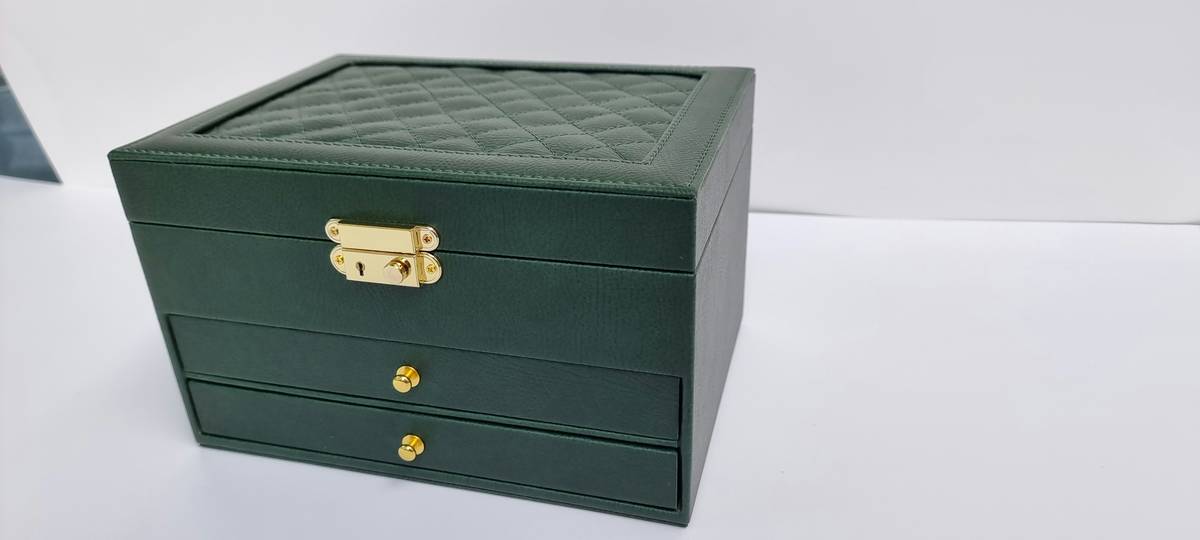
| Wooden Lockbox w/ Glass Top | Static-to-mobile hybrid setups | 5 | Heavy; hinges wear quickly with frequent opening |
The Industry Secret: Borrow from Museum Logistics (Not Retail Packaging)
Here’s what no product listing tells you: the best portable display cases aren’t designed by jewelers. They’re reverse-engineered from museum courier kits. Think about it—art handlers fly Picassos across oceans in climate-controlled crates. Same principles apply to your great-aunt’s diamond pendant.
The secret spec? Microporous silica gel channels. Integrated into the base lining, they buffer humidity spikes without direct contact. Most consumer cases just slap in a loose desiccant packet—which can leak or shift. Museum-grade builds embed the absorbent layer permanently. Look for brands that mention “passive RH stabilization.” That’s code for professional-grade care.
And don’t fall for “display” = “show off.” A truly smart portable case uses neutral-toned interiors (think charcoal gray, not bright white) to reduce glare and make stones appear deeper in color. It’s psychology—not just storage.
FAQ
Can I take jewelry display cases portable through airport security?
Yes—most TSA agents recognize them as secure containers. Keep it unlocked for inspection. Avoid metal-heavy designs that trigger secondary screening.
Do these work for watches or only rings/necklaces?
Absolutely for watches. Choose models with cushioned watch rolls or removable stands. Just ensure the case depth exceeds 1.5 inches to accommodate larger timepieces.
How often should I replace the humidity control?
If using embedded silica: never—it’s sealed. If using loose packets: replace every 3 months, or immediately after beach/humidity exposure.